
Destination
Malaysia
Three cultures in one lunch order, and skylines built over rainforest.
Malaysia does not get talked about the way its neighbours do, most likely because it is too well organised to generate good stories. Nothing goes dramatically wrong. The trains run, the signage is bilingual, and lunch is the best in Southeast Asia.
Three cuisines sharing one kitchen
Malay, Chinese and Indian communities have been cooking alongside each other here for generations, so you get three complete food cultures plus everything that emerged where they overlapped. Nasi lemak for breakfast, banana leaf rice at noon, roti canai from a mamak stall at any hour at all. Penang's George Town is the densest concentration of good, cheap food in the region.
Contrast within short distances
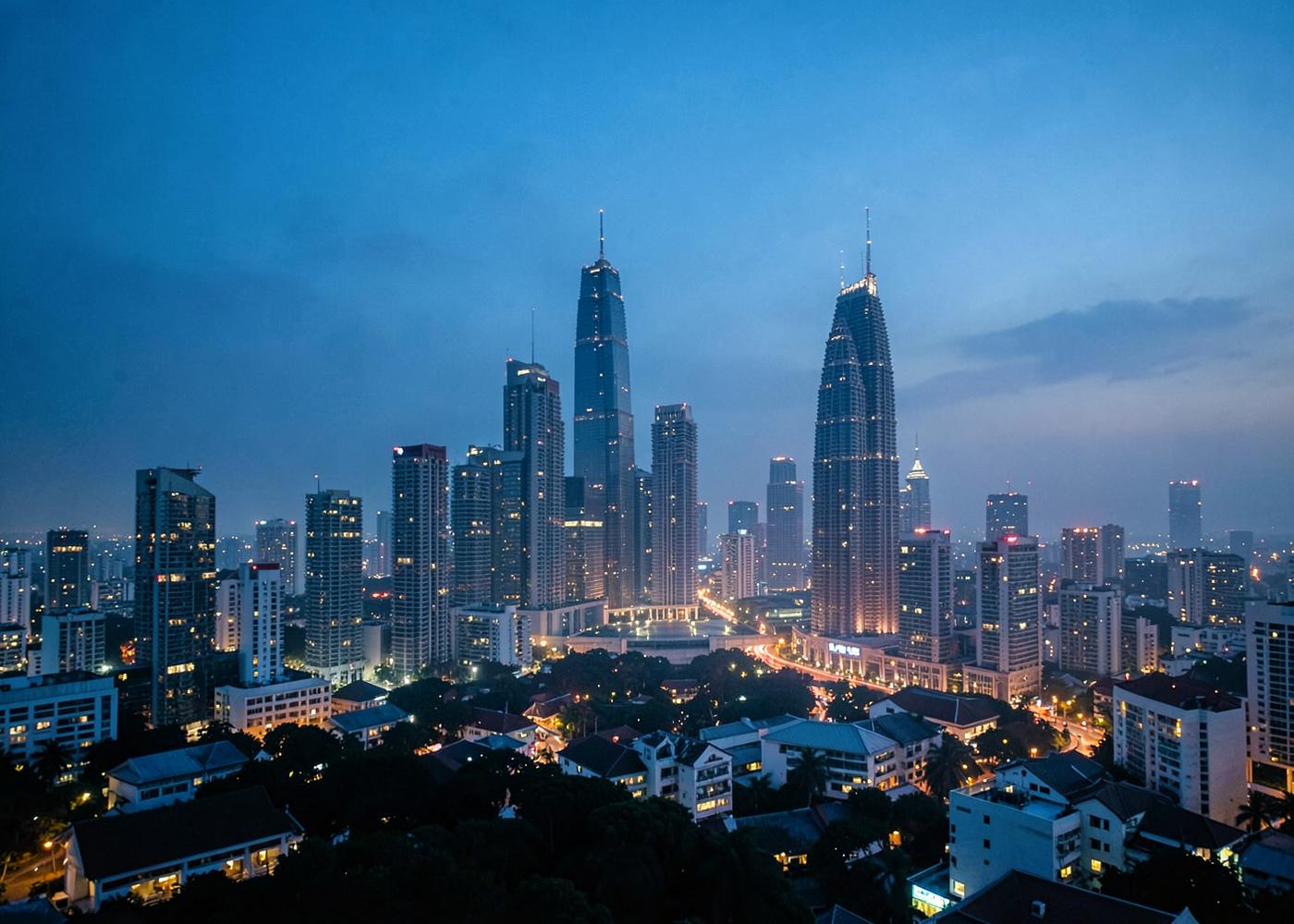
A modern capital of glass towers with a Malay village still standing in the middle of it. Colonial shophouses and clan jetties in Penang. Tea plantations at altitude in the Cameron Highlands. And across the sea, Sabah and Sarawak — rainforest, orangutans, Mount Kinabalu — which most visitors never reach at all.
What gets photographed here
Skylines pushed up out of rainforest, shophouse facades in low light, hawker stalls working over heat that would be illegal in a domestic kitchen, and the particular green of highland tea terraces at the point where the temperature finally drops.
currency
Malaysian ringgit (MYR)
language
Malay, English
best_time
March to September
transport
MRT, intercity coaches
What surprised me
That half the country is on Borneo and most itineraries never cross the water. Also that a beer costs what it does at home, sitting next to a two-dollar lunch.