
Destination
The Philippines
Seven thousand islands, and a different rhythm on every one.
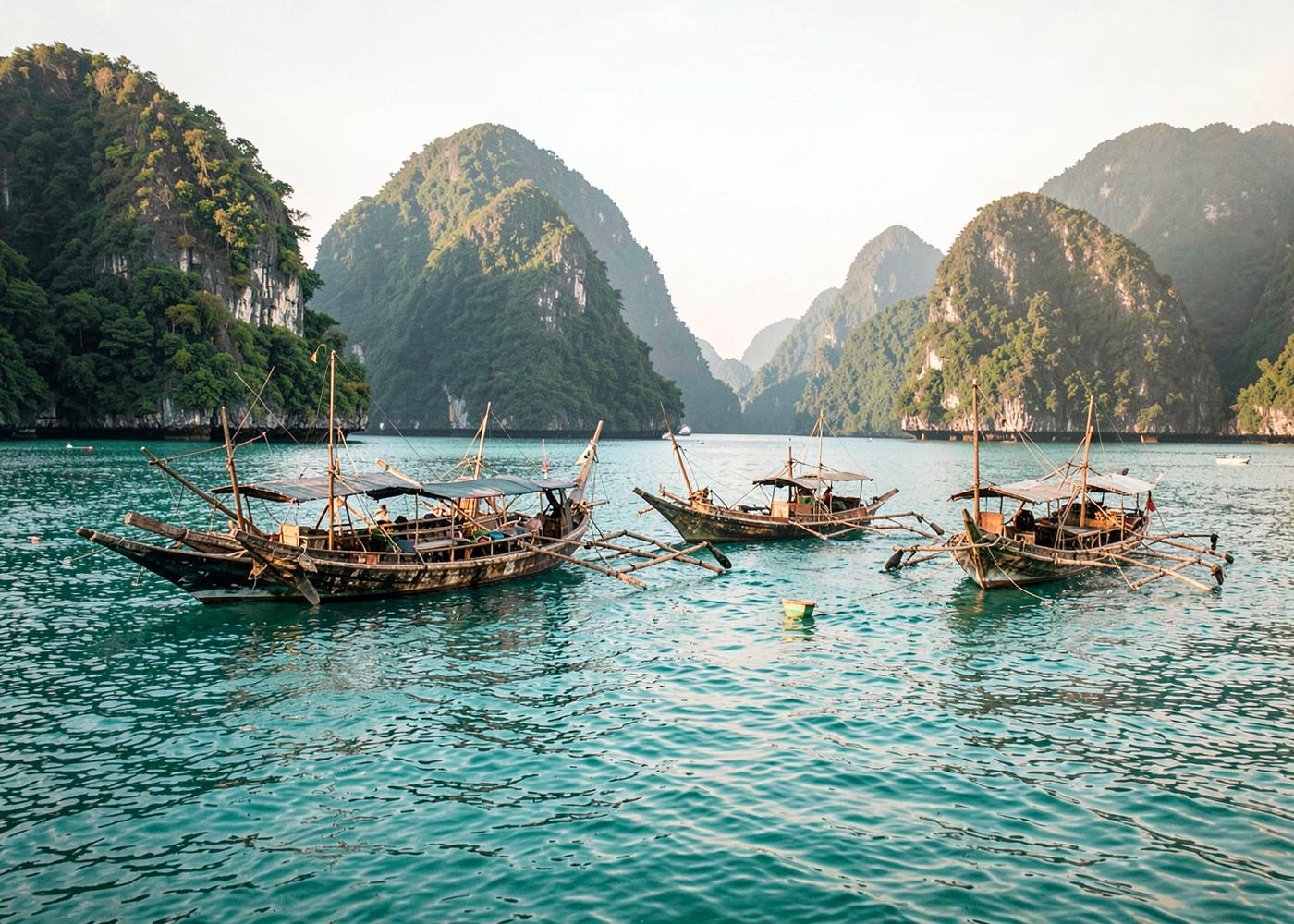
The Philippines asks more of you logistically than anywhere else in the region and gives more back for it. Ferries get cancelled, flights get moved, and then you round a headland and find water that colour with almost nobody in it.
Seven thousand six hundred islands, and the consequences
Domestic flights are the backbone and they are cheap, frequent and weather-dependent. Ferries range from excellent to alarming. Two places twenty kilometres apart can be a full travel day if there is no direct boat. One buffer day per week of travel absorbs almost every problem the country will throw at you.
What you get in exchange
The best coastline in Southeast Asia, and it is not especially close. Limestone bays in Palawan, reefs and wrecks that make this the cheapest place on earth to learn to dive, and enough coast that popular and empty sit an hour apart. Inland, two-thousand-year-old rice terraces carved into slopes at gradients that look impossible.
The part people underestimate
English is an official language, conversations happen constantly, and there is a directness and humour to them that makes the delays feel less like obstacles and more like part of the day.
What gets photographed here
Jeepneys loaded past sense, coins passed hand to hand down a row of strangers, market light, and Manila Bay turning orange at an hour that looks retouched and is not.
currency
Philippine peso (PHP)
language
Filipino, English
best_time
December to April
transport
Jeepneys, ferries, tricycles
What surprised me
How much of the appeal is the people rather than the beaches — and how quickly a cancelled boat turns into somebody organising you a better alternative.