Destination
Thailand
Street food smoke, overnight trains, and islands that still feel unhurried.
Thailand is the country most people in this region start with, and the one it is easiest to underestimate because the images arrived long before you did. Turquoise water, gold rooftops, a plate of noodles lit like jewellery — all real, all a fraction of the story.
What the map actually holds
Fifteen hundred kilometres from the Malaysian border to the Lao one, and the regions genuinely differ. The north is cooler and hillier with a herb-driven kitchen of its own. Isan, the northeast, is the largest region, the least visited, and the proudest of its food. The central plains are rice country and ruined capitals. The south splits into two coastlines with opposite monsoons, which is why there is no single right month to come.
Why it is so easy to travel
Budget flights are cheap, overnight trains still run and are still one of the better ways to cross the country, and Bangkok's rail network is fast and cold. Outside the cities, songthaews handle short hops on loose routes. You can travel here at whatever level of effort you feel like putting in, which is a rarer quality than it sounds.
What gets photographed here
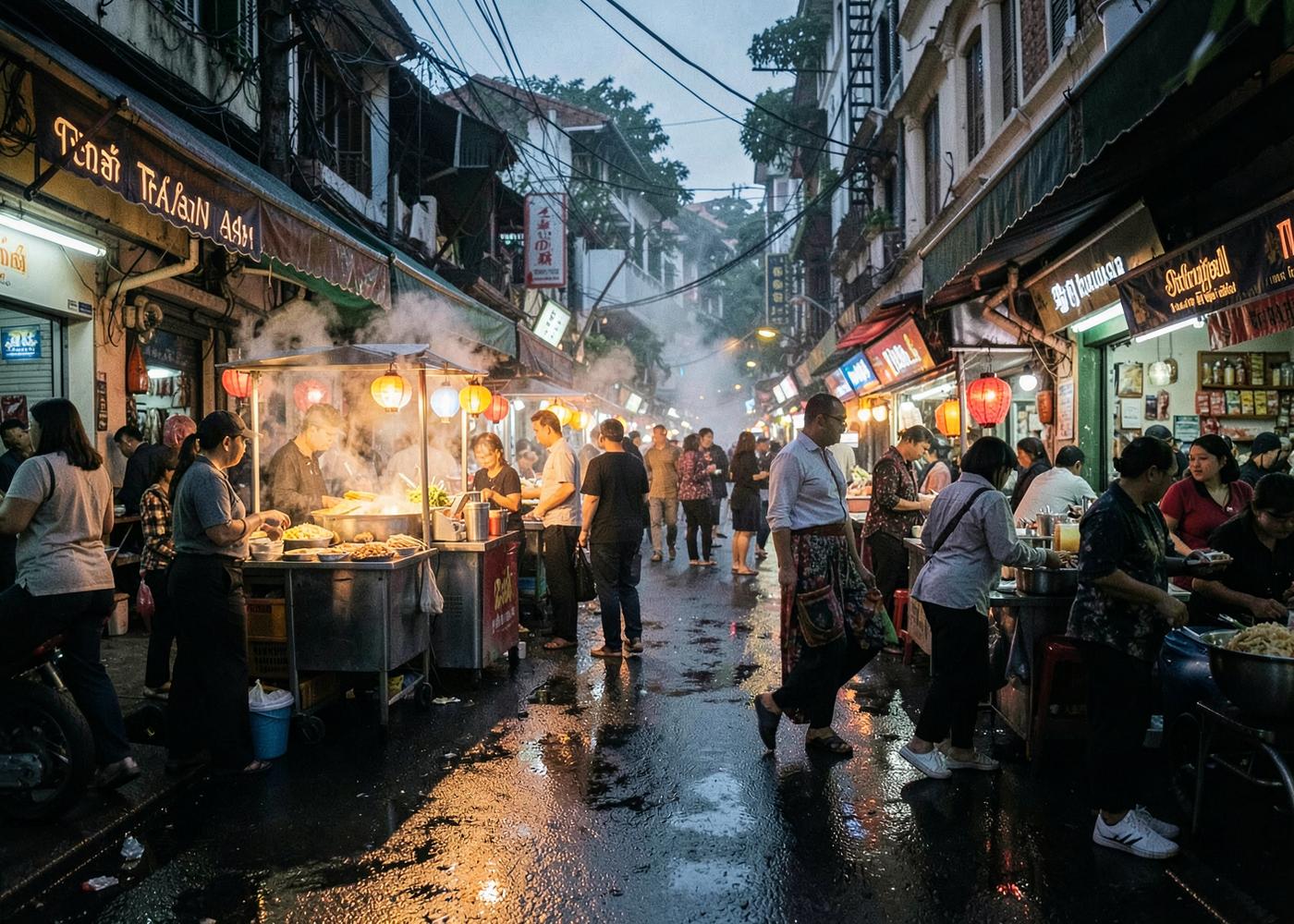
Street food at dusk, temple gold under flat light, boat commutes on the Chao Phraya, and the quiet residential sois that nobody expects from a city of eleven million. The postcard version is a good holiday. The version underneath it is why people come back a fourth time.
currency
Thai baht (THB)
language
Thai
best_time
November to February
transport
BTS, songthaews, overnight trains
What surprised me
How quiet Bangkok gets after ten at night, two streets away from the noise. And how little of Thailand most itineraries actually touch — Isan alone is bigger than a lot of countries and almost nobody goes.