
Malaysia · Destination guide
Malaysia Makes Travel Feel Easy
Good infrastructure, extraordinary food, and enough contrast to keep things interesting
16 September 2026
Malaysia does not get talked about the way Thailand and Vietnam do, and the most likely reason is that it is too well organised to generate good stories.
Nothing goes dramatically wrong. The trains run. The signage is in English. The food is spectacular and cheap, the cities are modern, the jungle is two hours from a metro station. It is the country you recommend to someone who wants Southeast Asia without the friction, and then quietly keep coming back to yourself.
Everything works, and that changes how you travel
The practical baseline here is unusually high for the region:
- **English is everywhere.** Official signage is bilingual, service industries speak it fluently, and almost nothing requires a translation app.
- **Transport is genuinely good.** KL's rail network covers the city. Intercity coaches are comfortable and punctual. The ETS train north from KL to Penang and Ipoh is fast, cheap and scenic.
- **Ride-hailing** is universal and cheap enough that taxis are essentially obsolete.
- **Payment infrastructure is modern.** Cards work widely, QR payments are standard, and ATMs are reliable.
- **Healthcare is excellent**, which matters more than people plan for.
The effect is that you spend your energy on the country rather than on logistics. Two weeks in Malaysia covers a lot of ground without ever feeling like an expedition.
The food is the actual headline
This is the best eating country in Southeast Asia, and the reason is historical rather than culinary genius in isolation: Malay, Chinese and Indian communities have been cooking alongside each other here for generations. You get three complete cuisines plus everything that emerged in the overlap.
A working list for a first visit:
- **Nasi lemak** — coconut rice, sambal, anchovies, peanuts, egg. Breakfast, and correctly the national dish.
- **Char kway teow** — flat noodles, high heat, that specific smoky flavour you cannot get from a domestic stove.
- **Roti canai with dhal** at a mamak stall, available at practically any hour.
- **Banana leaf rice**, an Indian-Malaysian institution with unlimited refills.
- **Laksa**, and specifically the fact that there are many laksas — the sour, fishy Penang asam laksa and the rich coconut curry versions are barely the same dish.
- **Nyonya cooking** in Penang and Melaka, the Chinese-Malay hybrid cuisine, which is the most distinctive food in the country.
- **Teh tarik**, pulled tea, both a drink and a performance.
Penang is the food destination. George Town's hawker scene is the densest concentration of good, cheap food in the region, and two days there is a genuinely serious eating itinerary.
Malaysia is the only country where I would happily plan an entire week around lunch and consider the trip well spent.
The contrast is the reason to stay longer
Ease alone would make Malaysia pleasant but forgettable. What makes it interesting is how much it contains within short distances.
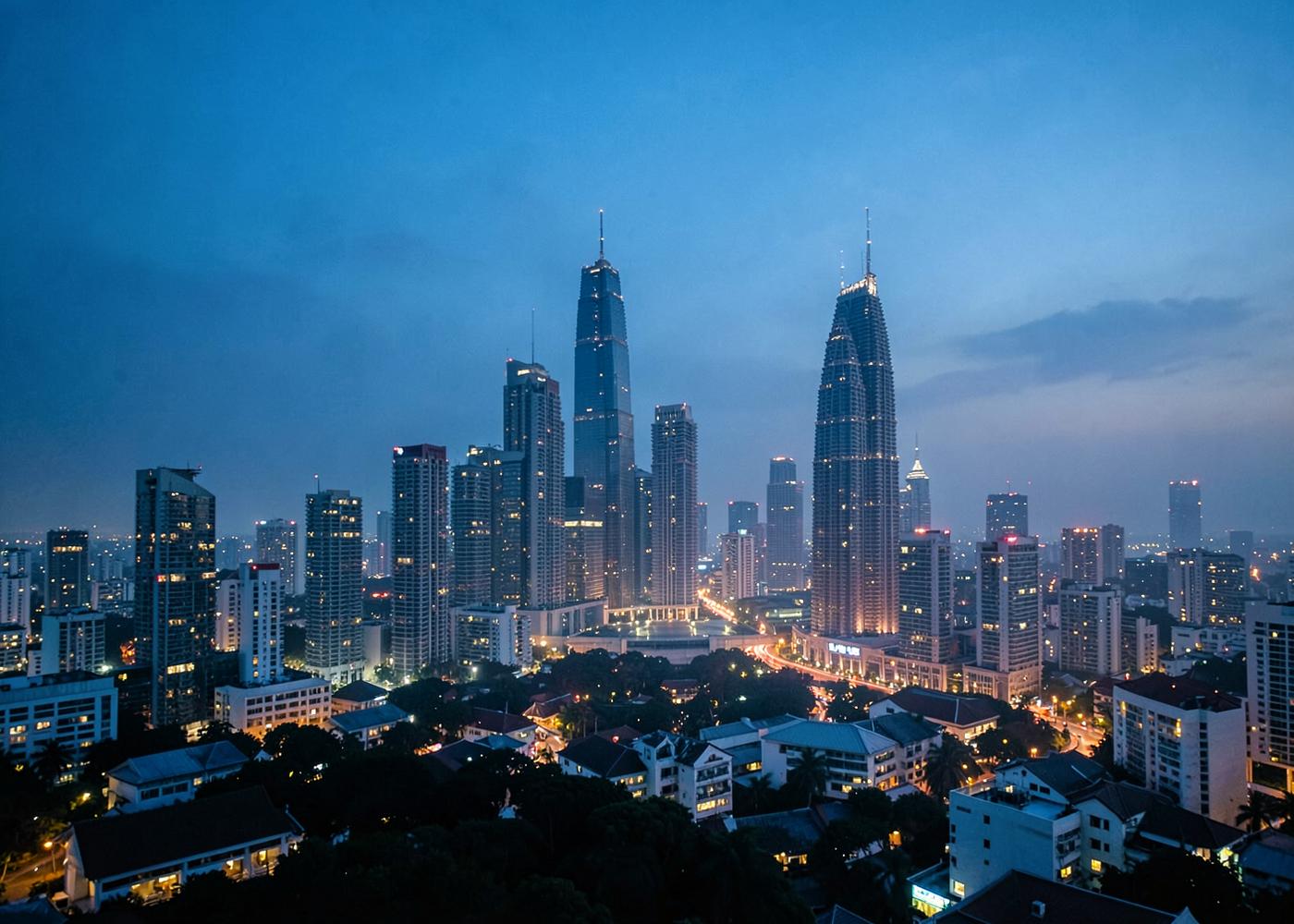
- **Kuala Lumpur** is a modern capital of glass towers with a Malay village still standing in the middle of it.
- **George Town** is colonial shophouses, street art, temples and clan jetties, all walkable.
- **The Cameron Highlands** are cool, green, and covered in tea plantations — a genuine temperature change a few hours from the coast.
- **Borneo** — Sabah and Sarawak — is a different country in practice: rainforest, orangutans, Mount Kinabalu, and some of the best diving on earth off Sipadan.
- **The east coast islands** are quiet, clear-watered, and operate on a monsoon calendar opposite to the west coast.
That Borneo half is the most underused part of the country. Most itineraries never cross the sea, which means half of Malaysia goes unvisited by most of its visitors.
Things worth knowing before you go
- **Two monsoon seasons, on opposite coasts.** The east coast islands largely close from November to February. The west coast is fine then. Plan accordingly rather than looking for one "best time".
- **It is a Muslim-majority country** with large Buddhist, Hindu and Christian populations. Dress modestly at religious sites, and be aware that conservatism varies significantly by state.
- **Alcohol is available but taxed heavily.** A beer costs what it does at home, which is jarring next to a two-dollar lunch.
- **Ramadan changes the rhythm** of the day and produces some of the best food markets of the year in the late afternoon.
- **Heat and humidity are constant** at sea level. The highlands are the release valve.
Who Malaysia suits
It suits first-timers in the region, because it is the gentlest possible introduction. It suits people travelling with family, because everything is reliable. It suits anyone who plans their days around eating.
It suits less well anyone chasing a dramatic travel narrative. This is not a country that tests you. If you want a story about a bus breaking down in the mountains, go elsewhere; the bus will arrive on time and there will be a decent café at the station.
The quiet case for going
The countries that are hardest to travel generate the most conversation, which means the easy ones get underrated. Malaysia is underrated.
You get three food cultures, two coastlines, one of the world's oldest rainforests, a properly modern capital, and an infrastructure that removes almost all the usual friction. The only real risk is that you spend the whole trip eating and never make it to Borneo.
Which, frankly, is a defensible way to spend two weeks.
A two-week route that works
- **Days 1–4, Kuala Lumpur.** Enough to walk the neighbourhoods properly, eat through three cuisines, and take a day trip to Batu Caves or the Melaka shophouses.
- **Days 5–8, Penang.** George Town on foot, hawker stalls twice a day, Kek Lok Si temple, and a morning in the national park if the eating needs interrupting.
- **Days 9–10, Cameron Highlands.** Tea terraces, cool air, and the first time in a week you will want a jacket.
- **Days 11–14, Borneo.** Fly to Kota Kinabalu or Kuching. Rainforest, wildlife, and the half of the country most visitors never see.
Swap the highlands for the east coast islands between March and September, when the water there is at its clearest.
Small things that make a difference
Carry a light layer for interiors — air conditioning here is enthusiastic. Eat your main meal at lunch when hawker centres are at full strength. Learn "terima kasih"; it is used constantly and appreciated every time. And do not plan anything tight around Friday midday prayers in more conservative states, when a lot of businesses pause.
None of this is difficult, which is the recurring theme. Malaysia's great quality is that it removes the obstacles and leaves you with the interesting part.