
The Philippines · Story
The Philippines Is Worth the Extra Effort
Why the logistics can be messy — and why the country is still one of the region’s most rewarding trips
16 September 2026
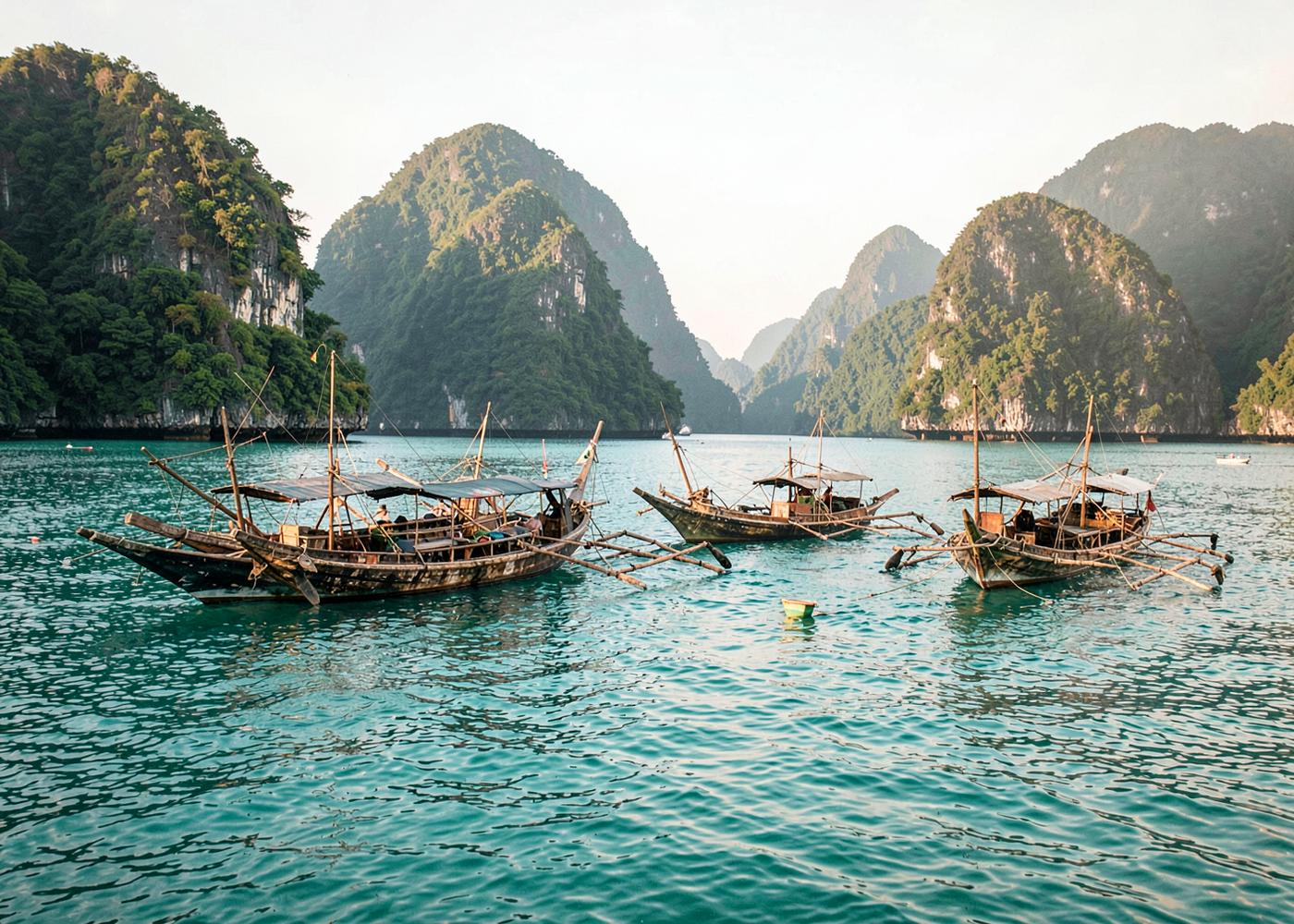
The Philippines is the country in this region that asks the most of you logistically and gives the most back for it.
Nowhere else do you spend quite so much time on ferries, in small airports, or waiting for a tricycle that was supposed to be here forty minutes ago. And nowhere else do you round a headland and find water that colour with almost nobody in it.
Both things are true at once. Anyone telling you only one of them is selling something.
Why the logistics are genuinely harder
Seven thousand six hundred islands. That is the whole explanation, but it has consequences worth understanding before booking anything.
- **Domestic flights are the backbone**, and they are frequent and cheap. They are also weather-dependent and casually rescheduled. Never book a same-day international connection.
- **Ferries range from excellent to alarming.** The big inter-island lines are fine. Small outrigger boats to remote beaches depend entirely on the sea state, and captains do cancel, which is the correct decision even when it ruins your plan.
- **Island hopping is slower than the map suggests.** Two places twenty kilometres apart can be a full travel day if there is no direct boat.
- **Typhoon season, roughly June to November**, is a real planning factor, particularly in the east and centre.
The single most useful habit: build in buffer days. One spare day per week of travel absorbs almost every problem the country will throw at you.
What you get in exchange
The coastline. There is no way around it — the Philippines has the best beaches and the best water in Southeast Asia, and it is not especially close.
Palawan gets the attention, and El Nido's limestone bays deserve it, though they are now busy enough that going in shoulder season matters. The wider truth is that the country has so much coast that popular and empty exist an hour apart almost everywhere.
Below the surface it gets better still. This is world-class diving and snorkelling: reef, wrecks, walls, and one of the highest concentrations of marine biodiversity anywhere. If you have ever thought about learning to dive, this is the cheapest and most spectacular place to do it.
And it is not only coast. The rice terraces in the northern mountains are two thousand years old and carved into slopes at a gradient that seems impossible. Volcanoes, jungle, waterfalls, and inland towns that see almost no foreign visitors at all.
The trade is simple. You spend more time in transit than anywhere else in the region, and you get views nowhere else in the region can offer.
The part everyone underestimates: the people
Travellers consistently report the same thing, and it holds up. The Philippines is one of the friendliest countries anywhere to travel in, and not in a transactional way.
Part of it is language — English is an official language and widely spoken, so conversations happen easily and constantly. Part of it is culture. There is a directness and a sense of humour to interactions here that makes the whole country feel less like an obstacle course and more like a series of conversations with occasional boats.
Practically, this makes the hard logistics survivable. When the ferry is cancelled, somebody will tell you what the actual options are, and often organise one.
Food, and its slightly awkward reputation
Filipino food does not have the international profile of Thai or Vietnamese cooking, and that is a marketing problem more than a food problem. It is sour, salty, garlicky, and less herb-driven than its neighbours, which is why it reads unfamiliar to people expecting regional similarity.
Worth seeking out:
- **Adobo**, the national argument, meat braised in vinegar, soy and garlic. Every family's version is the correct one.
- **Sinigang**, a sour tamarind soup that makes complete sense in the heat.
- **Lechon**, whole roast pork, and specifically the Cebu version, which needs no sauce.
- **Kinilaw**, raw fish cured in vinegar and citrus — the coastal equivalent of ceviche and frequently better.
- **Halo-halo**, shaved ice with everything in it, structurally chaotic, genuinely great.
- **Breakfast silogs**: garlic rice, fried egg, and some form of cured meat. The most reliable meal in the country.
Getting around on the ground
- **Tricycles** — motorbikes with sidecars — handle short distances in almost every town. Agree the fare first.
- **Jeepneys** run fixed routes for very little money. Pass your fare forward; somebody will pass your change back.
- **Vans** cover longer overland routes and leave when full, which is a flexible concept.
- **Ride-hailing** works in Manila and Cebu and largely not elsewhere.
- **Cash** matters outside the cities. Island ATMs run out, especially on weekends.
How to plan a trip that actually works
The most common mistake is treating the country as one destination. It is not; it is an archipelago the size of a continent's worth of coastline.
A better approach:
- **Pick two regions, maximum, for two weeks.** Three is a transit holiday.
- **Fly between regions, boat within them.**
- **Anchor each region with a base** and take day trips, rather than relocating every second night.
- **Leave the last two days near the airport you fly out of.** Weather has ended a lot of otherwise excellent trips at this exact step.
The honest verdict
If you want frictionless travel, Malaysia and Thailand do it better. The Philippines is not the country for a tightly scheduled first trip through Southeast Asia.
What it offers instead is scale and space — water and coastline that genuinely exceed the photographs, islands where you can still be the only people on a beach, and a national temperament that makes the inevitable delays feel less like problems and more like part of the day.
Go with extra days in the plan and a loose attitude to the itinerary. The country handles that combination extremely well.
Two itineraries that actually work
**Two weeks, first visit.** Fly into Manila, one night, then straight on to Palawan — El Nido and Coron for six or seven nights of boats and water. Fly to Cebu or Bohol for the second week: diving, waterfalls, and a slower pace. Finish with a buffer night near the departure airport.
**Two weeks, second visit.** Skip Palawan entirely. North Luzon for the rice terraces and mountain towns, then Siargao or Siquijor for the coast. Less famous, considerably quieter, and the transport is no worse.
Small things that make a difference
Download offline maps; mobile coverage disappears between islands. Bring cash to smaller islands and do not rely on the one ATM. Confirm boat times the evening before, because posted schedules are aspirational. Pack a dry bag — you will be getting on and off small boats in shallow water more often than you expect.
And say yes to the karaoke. Declining is technically allowed and socially baffling.