
Laos · Luang Prabang · Story
Slow Mornings in Luang Prabang
River mist, quiet streets, and why this small Lao city is best experienced without rushing
13 August 2026
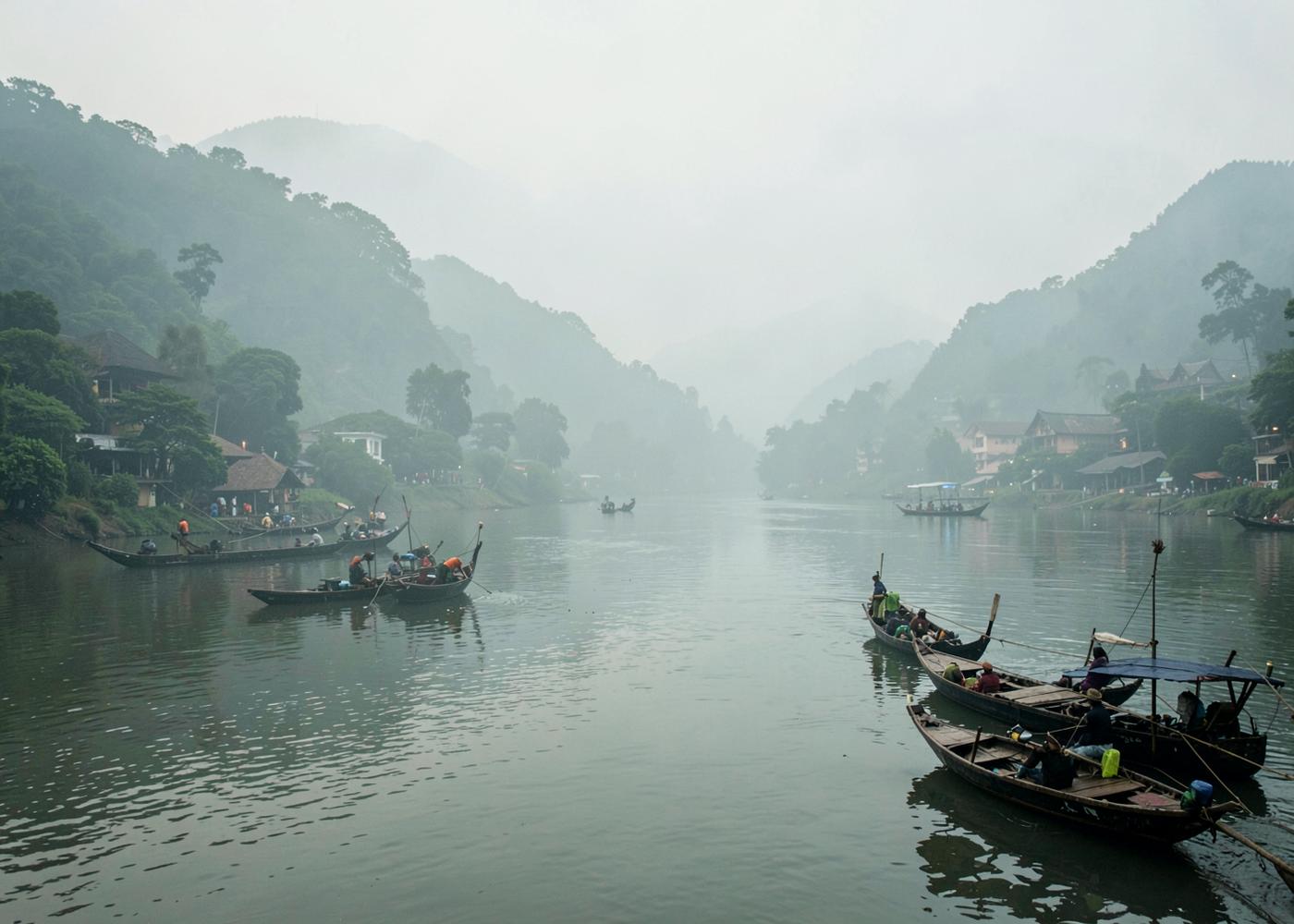
Luang Prabang is small in a way that feels deliberate. Two rivers meet, a few dozen temples sit between them, the buildings are low, and by ten at night the whole town is essentially asleep.
It is the sort of place that is routinely described as "sleepy", which is both accurate and slightly unfair, because the mornings here are the busiest and best part of the day and almost everybody misses them.
The town wakes before the visitors do
The Mekong throws mist over the peninsula most mornings, and for about an hour the town is grey-blue, cool, and almost empty of traffic. Monks in orange move along the main street collecting alms. Market vendors are already three hours into their day. Somebody is sweeping a temple courtyard. That is roughly the entire soundtrack.
If you get up for one thing in Laos, get up for this.
A note on the alms round, because it matters: it is a daily religious practice, not a performance. It has been damaged in places by visitors treating it as a photo opportunity — flash in faces, cameras inches away, people buying low-quality rice from touts to hand out. The respectful version is simple. Stand back, stay quiet, do not use flash, do not block the path, and if you are not participating sincerely, do not participate. Watching from a distance is entirely fine and the better experience anyway.
The best thing about a six o'clock start here is not the photograph. It is the twenty minutes afterwards when the town is awake, cool and completely yours.
What the morning market gets right
The fresh market near the centre runs early and is not staged for anyone. Greens, river fish, herbs you will not recognise, bamboo shoots, buffalo skin, chillies sorted by heat, and coffee poured strong and sweet into small glasses.
It is the best place in town to understand Lao food, which is distinct from Thai food despite the overlap: more sticky rice, more herbs eaten raw by the handful, more bitterness treated as a feature. Laap, the minced meat salad, is the national dish and is worth ordering more than once because every kitchen makes it differently.
Buy fruit. Drink the coffee — Laos grows good beans on the Bolaven Plateau and the local method is short, dark and aggressive.
The middle of the day belongs to the temples and the river
Once the heat arrives, the town slows down properly. This is not a place with a long list of things to do, and trying to manufacture one misses the point.
What is worth the time:
- **Wat Xieng Thoung**, the most beautiful building in town, with a roof that sweeps almost to the ground and a tree-of-life mosaic on the rear wall that is worth standing in front of for a while.
- **Mount Phousi** at the centre, a few hundred steps up for a full view of the two rivers. Sunset up here is famous and crowded; late morning is empty and the view is the same.
- **A slow boat on the Mekong**, even just for an hour. The river is wide, brown, fast, and lined with hills and the occasional village. It is the clearest reminder of how much of Laos is rural.
- **Kuang Si Falls**, half an hour out of town. Tiered, turquoise, genuinely as good as the pictures. Go early or late; the middle of the day brings every minibus in the province.
The French thing, and why it is not just decoration
The colonial architecture — shuttered windows, verandas, ochre walls — is why the town is UNESCO-listed and why it photographs the way it does. It sits alongside Lao temple architecture rather than replacing it, and the combination is unusual: a Buddhist town with croissants.
The bakeries are good and this is not a gimmick. Baguettes here are a genuine part of daily food, most often as a sandwich stuffed with pâté, herbs and chilli sauce. It costs very little and is one of the better street lunches in the region.
Evening: an early night, on purpose
The night market sets up along the main street in the late afternoon — textiles, paper lamps, silver, and a lane of vegetarian buffet stalls where you fill a bowl for a couple of dollars. It is calm as night markets go. Nobody shouts at you.
After that, not much. A few bars, an early curfew that has been in place for years, and a town that genuinely goes dark. The first night this feels like a shortage. By the third it feels like the best thing about the place, mostly because it makes the six a.m. start painless.
Practical notes
- **Getting there:** flights from Bangkok, Hanoi or Chiang Mai, or the new fast train from Vientiane and the Chinese border, which has made the whole country dramatically easier to move around.
- **Currency:** Lao kip, and cash still matters. ATMs exist but do not assume a card will work everywhere.
- **When:** October to April is dry and cool. The end of the dry season can bring agricultural burning haze, which affects both the views and the air.
- **Pace:** two nights is not enough. Three is right. Four means you stop looking at the list and start noticing the place.
- **Dress:** shoulders and knees covered around temples. It is a conservative, religious town and the standard is noticed.
Why the slowness is the point
Plenty of towns in Southeast Asia have temples, a river and good food. What Luang Prabang has is a scale small enough that you stop planning. You walk everywhere. You see the same faces. You end up on the same riverside bench two evenings in a row because it was good the first time.
That only works if you let the itinerary go. People who arrive with a schedule tend to leave after a day and a half saying there was not much to do, which is technically correct and completely beside the point.
Come for the mornings. Stay long enough that the mornings stop feeling like an effort. That is the whole trip.
A shooting day that works here
**06:00** — river light and the alms round, watched from across the street. Cool air, empty roads, no traffic in the frame. **07:00** — the fresh market, while the vendors are busy enough not to mind you. **09:00** — temple courtyards before the tour groups and while the light still has an angle to it. **12:00** — stop. Nothing good happens in that light and the heat wins anyway. **16:00** — the river, a boat, or the walk up Phousi. **18:00** — night market setting up, paper lamps lighting, and the last usable hour of sky.
Small things that make a difference
Bring cash in small denominations. Bring a light layer for the morning — at altitude in December it is genuinely cold before sunrise. Ask before photographing people, including monks, and accept no gracefully. And do not plan the last evening around anything that starts late; the town will already be closing.