
The Philippines · Manila · Photo journal
The Everyday Side of Manila
A photo journal about the ordinary moments that give a huge city its personality
21 August 2026
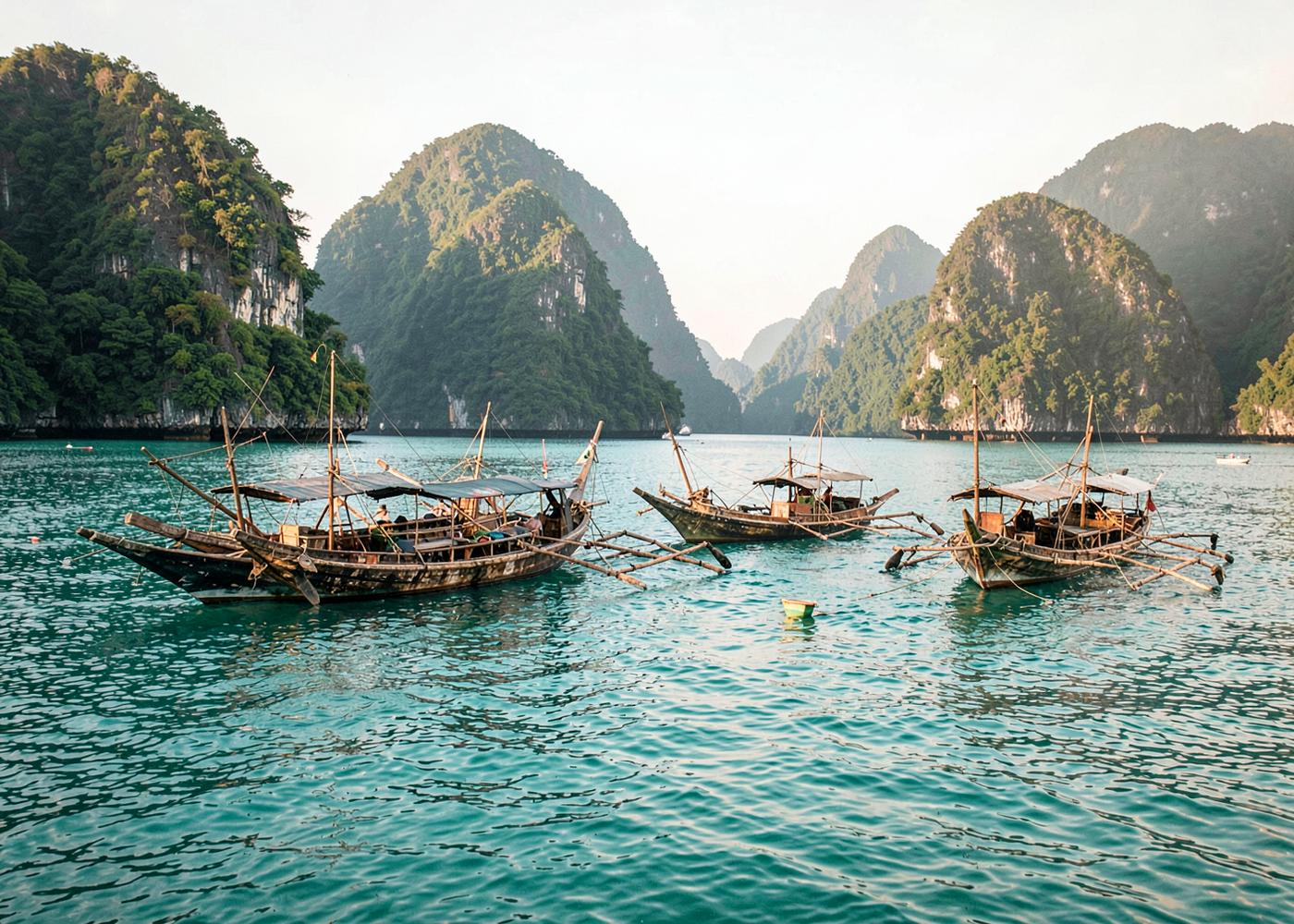
Manila is a hard city to photograph well, and an easy one to photograph badly.
Badly is the dramatic version: the poverty shot, the traffic shot, the lone silhouette against smog. All technically true, all of it the visual equivalent of describing a person entirely by their worst week. What is harder, and more interesting, is the ordinary stuff — the enormous amount of everyday life that happens in public here, constantly, in full view.
This is a photo journal about that. The middle register. The part where thirteen million people get on with it.
Morning: the city assembles itself
Manila starts early because the commute demands it. By six the jeepneys are moving, the sari-sari stores have their shutters half up, and the smell of pandesal from neighbourhood bakeries is doing more to wake people up than coffee.
Visually, the early hours are the kindest. Low light cuts through the haze instead of sitting in it, the colours on the jeepneys read properly, and there is a brief period where the streets are busy without being solid.
What is worth looking at:
- **Sari-sari stores.** Tiny shops built into the front of houses, selling everything in single-serving portions — one sachet of shampoo, three cigarettes, a spoonful of coffee. They are the most photographed thing in the country by residents and the least photographed by visitors.
- **Basketball courts.** Every neighbourhood has one, often painted on the street itself with hoops bolted to poles. They are in use at hours that suggest nobody sleeps.
- **Laundry lines** strung between buildings, which do more for a frame's colour than anything you could stage.
Midday: the light goes flat and the city does not care
Between eleven and three the light is direct, harsh and unflattering, and the heat is at its most committed. This is the wrong time for wide street shots and the right time for interiors, covered markets, and the deep shade under overpasses where half the informal economy relocates.
Covered markets are the best midday subject in Manila. The light comes through gaps in corrugated roofing in hard shafts, the colour is overwhelming — fish, mangoes, plastic buckets in primary shades — and the people working there are entirely unbothered by a camera, provided you are not being strange about it.
The best rule for photographing a city like this: if you would be uncomfortable being photographed the way you are photographing, put the camera down.
Jeepneys deserve their own section
Nothing else looks like a jeepney. Post-war American military jeeps, extended, chromed, hand-painted, named after saints and children and basketball players, loaded past sense, and still the backbone of how the city moves.
They are also a lesson in how to photograph a moving subject in bad conditions. Static shots of a parked jeepney look like a museum exhibit. What works is the jeepney with people hanging off the back, the conductor leaning out, coins being passed forward hand to hand along a row of strangers — which is a genuinely lovely ritual and happens on every single ride.
The fleet is slowly being modernised, which means many of the older painted jeepneys will not be around forever. That is worth pointing a camera at now.
Afternoon: Intramuros and the weight of the old city
The walled Spanish colonial quarter is the one part of Manila that looks like the history books, mostly because most of the rest of it was flattened in 1945. The stone walls, San Agustin Church, the cobbles and the horse carriages are all real, and the district is quiet enough to shoot properly.
What makes it work photographically is the contrast at the edges: four-hundred-year-old walls with modern Manila directly behind them, students in uniform crossing a plaza built for a different empire, a basketball hoop attached to a colonial-era wall.
Go late in the afternoon. The stone takes warm light beautifully and the tour groups thin out.
Evening: the good hour
Golden hour in Manila is genuinely spectacular, partly because of the pollution — the haze scatters the light and turns sunsets over Manila Bay orange and red in a way that looks retouched and is not.
Manila Bay at sunset is the most reliably beautiful thing in the city and it is free. The baywalk fills with families, couples, vendors selling balut and ice cream, kids on bikes, and everyone facing the same direction for about twenty minutes.
After dark the character shifts again. Street food carts light up, karaoke starts somewhere within earshot and does not stop, and the city becomes a series of small pools of light — a fluorescent tube over a fish ball cart, a TV visible through an open doorway, headlights through smog.
A few practical notes if you are shooting here
- **Ask.** Filipinos are, as a rule, extremely willing to be photographed and will usually improve the shot by getting involved. The pictures are better when they are collaborative.
- **Traffic is the main hazard, not crime.** Ordinary caution applies as in any large city, but the thing most likely to ruin your day is a vehicle, not a person.
- **Carry less.** Heat plus humidity plus a heavy bag equals bad decisions by noon.
- **Afternoon rain is real in wet season.** It arrives fast, empties hard, and leaves wet streets that reflect everything — which is the best photographic gift the weather gives you all day.
- **Budget for traffic, not distance.** Four kilometres can be ninety minutes. Plan two locations a day, not five.
What the photographs add up to
The consistent thing across every frame from Manila is density — of people, of signage, of stuff, of activity crammed into every available surface. It can read as chaos in a single image. Across a series it reads as something else: a city where an enormous amount of life is lived outdoors, publicly, in close proximity, and largely with good humour about it.
That is the honest version. Not the dramatic one, not the sanitised one. Just an ordinary Tuesday in a very large city, which is usually the most interesting thing there is to photograph.
A shot list, loosely
- A sari-sari store front, shot straight on, with the hanging sachets in frame.
- Coins moving forward along a jeepney bench.
- Market interior at midday, hard shafts of light through the roof.
- Intramuros walls with modern Manila directly behind them.
- The baywalk crowd at sunset, all facing the same direction.
- A street corner after rain, everything reflected.
Small things that make a difference
Shoot early and late and accept that the middle of the day belongs to interiors. Carry water, not gear. Learn "salamat po" and use it after every frame with a person in it. And if a shot needs someone to look poorer than they are to work, it is not a good shot — it is a cliché with a shallow depth of field.